Rwanda Tours
Rwanda Safari Overview – Discover the Land of a Thousand Hills
Renowned as the “Land of a Thousand Hills and a Million Smiles,” Rwanda has rapidly emerged as one of Africa’s premier travel destinations – offering breathtaking landscapes, vibrant culture, and some of the most unforgettable wildlife experiences on the continent. Rwanda Gorilla Trekking Tours: At the heart of Rwanda’s tourism appeal is mountain gorilla trekking in Volcanoes National Park, an extraordinary adventure that attracts visitors from all corners of the globe. As the country’s leading source of foreign exchange, tourism – particularly gorilla tourism – has been prioritized and professionally managed by the Rwanda Development Board (RDB), ensuring world-class standards in conservation and hospitality.
Despite a painful history, Rwanda has made a remarkable recovery since 1994 and is now celebrated as one of the fastest-growing and safest countries in East Africa, with well-developed infrastructure and modern tourist facilities. Terrain Safaris offers a thoughtfully curated range of Rwanda safari packages, professionally designed to showcase the very best the country has to offer. Whether you’re dreaming of encountering gorillas face-to-face, trekking chimpanzees in Nyungwe Forest, spotting big game in Akagera National Park, or exploring Rwanda’s rich birdlife and cultural heritage – our expert-guided tours are crafted to deliver unforgettable experiences.
- Gorilla & Golden Monkey Trekking in Volcanoes National Park
- Chimpanzee Tracking in Nyungwe Forest
- Wildlife Safaris in Akagera National Park
- Rwanda Birding Tours featuring Albertine Rift endemics
- Cultural Immersion Experiences with local communities
Without reference to the mountain gorilla, no discussion of Rwanda’s tourism and conservation success would be complete, the species most closely associated with the country’s international profile. Volcanoes National Park, located in the Virunga Massif in Rwanda’s north-west, is home to a significant proportion of the world’s remaining mountain gorilla population. The species that was once considered critically endangered and remains among the rarest great apes on planet Earth.
Rwanda’s approach to gorilla tourism has been deliberately structured around the principle of high-value, low-volume visitation. Permit numbers are strictly limited, with a maximum of eight visitors permitted to spend one hour with a habituated gorilla family per day, and permit pricing is set at a premium rate, currently USD 1,500 per person for foreign non-residents. While this pricing model has occasionally attracted comment for its relative cost compared to neighbouring destinations, the underlying rationale is sound: by limiting visitor numbers and generating substantial revenue per visitor, the pressure placed on fragile gorilla habitats is minimised, while the resulting income can be directed toward conservation and community development.
This model has, by most measures, proven remarkably successful. Mountain gorilla populations across the Virunga region have shown a sustained upward trend in recent decades, a rare conservation success story amid broader global patterns of biodiversity decline. This progress reflects not only careful visitor management but also sustained investment in anti-poaching patrols, veterinary care for habituated gorilla families, and habitat protection.
Rwanda has, over the past two decades, established itself as one of Africa’s most compelling examples of how tourism and conservation can be developed hand in hand. Often referred to as the “Land of a Thousand Hills,” this small East African nation has transformed itself from a country once associated primarily with the tragic events of 1994 into a widely respected destination for high-value, low-impact tourism, underpinned by a genuinely rigorous approach to environmental protection. This article offers a considered overview of how Rwanda has approached this balance, the key pillars of its conservation strategy, and the broader implications for both visitors and the country’s long-term development.
Rwanda’s modern tourism industry cannot be properly understood without acknowledging the context from which it emerged. In the aftermath of the 1994 genocide, the country faced the considerable task of rebuilding not only its economy and institutions but also its international reputation. Rather than viewing this as an insurmountable obstacle, successive Rwandan governments have approached national recovery with a clear, long-term vision, in which tourism and conservation have played a central and deliberate role.
This vision has been formalised through Rwanda’s broader development strategy, which identifies tourism as one of the country’s key economic pillars, alongside agriculture and services. Unlike some destinations where tourism development has occurred somewhat organically, Rwanda’s approach has been notably structured, with clear policy direction from institutions such as the Rwanda Development Board (RDB), which oversees tourism promotion, conservation partnerships, and private sector engagement.

While mountain gorillas remain Rwanda’s most internationally recognised conservation achievement, the country’s efforts extend considerably further. Akagera National Park, located in Rwanda’s east along the Tanzanian border, offers a compelling case study in ecosystem restoration. Following significant degradation during and after the 1994 genocide, when the park’s boundaries were reduced and wildlife populations severely depleted, Akagera has undergone a remarkable recovery through a partnership between the Rwanda Development Board and the conservation organisation African Parks.
This partnership has reintroduced lions, which had been locally extinct for approximately two decades, and subsequently reintroduced eastern black rhinoceros, restoring Akagera’s status as a genuine “Big Five” destination, alongside elephant, buffalo, and leopard. Anti-poaching measures, including canine tracking units and improved ranger training, have contributed to a significant decline in poaching incidents within the park.
Nyungwe National Park, an expanse of montane rainforest in southwestern Rwanda, represents another important pillar of the country’s conservation and tourism portfolio. Home to chimpanzees, numerous other primate species, and exceptional birdlife, Nyungwe has benefited from investments such as a canopy walkway, which allows visitors to experience the forest ecosystem from an elevated vantage point while minimising ground-level disturbance to sensitive habitats.
As Rwanda’s tourism sector continues to expand, with growing visitor numbers, an increasing range of accommodation options, and new investment in infrastructure such as Kigali’s international airport, the country faces the ongoing challenge of maintaining the careful balance between growth and environmental protection that has defined its approach thus far.
Rwandan authorities have generally sought to address this challenge by maintaining strict visitor limits within its most ecologically sensitive areas, even as demand increases, and by encouraging diversification of tourism offerings, including cultural tourism, conference and business tourism, and adventure activities such as hiking Rwanda’s volcanic peaks. This diversification helps to distribute tourism’s economic benefits more broadly, while reducing pressure on any single ecosystem or attraction.
Revenue Sharing and Community Engagement
A defining feature of Rwanda’s conservation philosophy is its emphasis on ensuring that local communities living adjacent to protected areas benefit directly from tourism revenue. Under Rwanda’s revenue-sharing scheme, a meaningful percentage of park-related income, including a portion of gorilla permit fees, is allocated to community development projects in areas bordering national parks.
These funds have supported the construction of schools, health centres, and clean water infrastructure, as well as income-generating initiatives such as beekeeping, weaving cooperatives, and community-run tourism enterprises. This approach recognises an important conservation principle: protected areas are far more likely to be safeguarded over the long term when neighbouring communities perceive tangible benefit from their continued existence, rather than viewing wildlife and forest resources as competing with their own livelihoods.
Community-based tourism initiatives have also flourished around Rwanda’s parks. Visitors to Volcanoes National Park, for instance, can participate in cultural experiences such as the Iby’Iwacu Cultural Village, which offers insight into traditional Rwandan life while providing direct income to local residents, many of whom were previously engaged in activities such as poaching or unsustainable resource extraction.
Some Of Our Featured Safari Packages
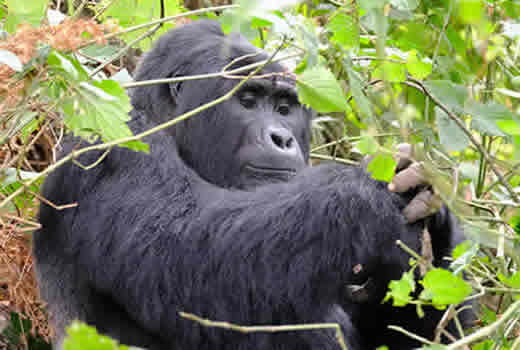
4 Day Rwanda Primates/Gorilla Trekking Tour
This unforgettable four-day journey through Rwanda offers an intimate and immersive encounter with one of the world’s most awe-inspiring wildlife experiences - tracking mountain gorillas in Volcanoes ....
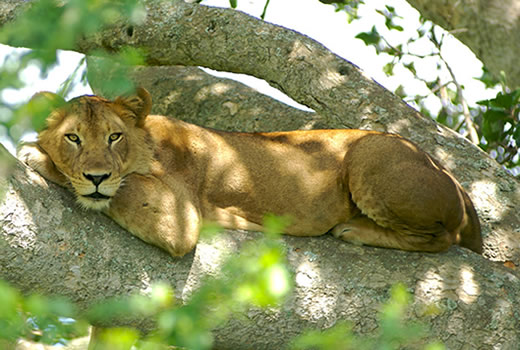
3 Day Akagera Wildlife Safari – Rwanda
A 3 day Rwanda private wildlife safari, which starts and finishes in Kigali. This safari takes you to Akagera National Park with its beautiful undulating plains, its woodlands and sprawling lakes and wetlands.
5 Days Rwanda Gorilla – Lake Kivu Safarii – Rwanda
Upon arrival at Kanombe International Airport in Kigali, you will be met by a representative who will welcome you and transfer you to your respective Hotel in Kigali for dinner and overnight stay Hotel Mille Collines
6 Day Mountain Gorillas & Primates Safari – Rwanda
This 6-day Rwanda safari combines primate trekking in Nyungwe Forest, chimpanzee tracking, Lake Kivu relaxation, and mountain gorilla trekking in Volcanoes National Park.
7 Day Rwanda Gorilla & Chimp Trekking Tour
This 7-day Rwanda safari combines gorilla trekking and chimpanzee trekking, Nyungwe's canopy walk, Dian Fossey's research center, and Kigali's cultural sites.
8 Day Rwanda Golden Monkey & Chimps Tour
Experience Rwanda on a thrilling 8-day Rwanda safari featuring Nyungwe primate tracking, gorilla trekking in Volcanoes National Park and a visit to Dian Fossey's Karisoke Research Center.
8 Day Rwanda Golden Monkey & Chimps Tour
Experience Rwanda on a thrilling 8-day Rwanda safari featuring Nyungwe primate tracking, gorilla trekking in Volcanoes National Park and a visit to Dian Fossey's Karisoke Research Center.
10 day Rwanda birding & Wildlife Safari
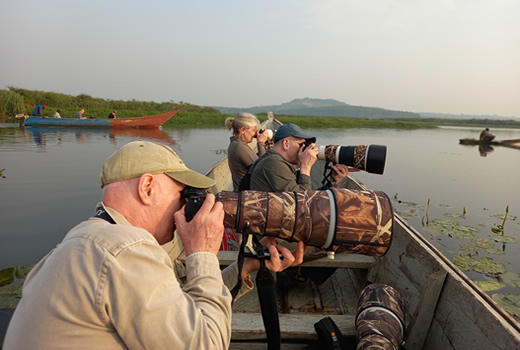
Rwanda “The Country of a thousand hills” is indeed a true birder’s heaven, blessed with more than 703 species, including 29 of the Albertine Rift Endemics, diverse habitats & montane bir..
12-Day Rwanda Birding, Gorillas & Big Five
This journey combines Rwanda’s signature wildlife experiences - gorilla and golden monkey trekking in Volcanoes National Park, chimpanzee tracking in Nyungwe Forest.
Rwanda’s conservation ethos is not confined to its national parks. The country has become notable across Africa for its broader environmental policies, including a nationwide ban on single-use plastic bags, introduced in 2008, which has been credited with contributing to Rwanda’s reputation for cleanliness, and a monthly nationwide community service day known as Umuganda, during which citizens participate in communal environmental and infrastructure work.
These policies reflect a broader national culture in which environmental stewardship is treated as a shared civic responsibility rather than solely a matter for park authorities or tourism operators. For visitors, this often translates into a noticeably well-maintained public environment, from the capital city of Kigali through to more rural areas, which enhances the overall visitor experience while reinforcing the country’s conservation credentials.