- admin
- November 12, 2026
- Our Blog
Our Blog
Gorilla Habituation in Bwindi Impenetrable Forest, Uganda
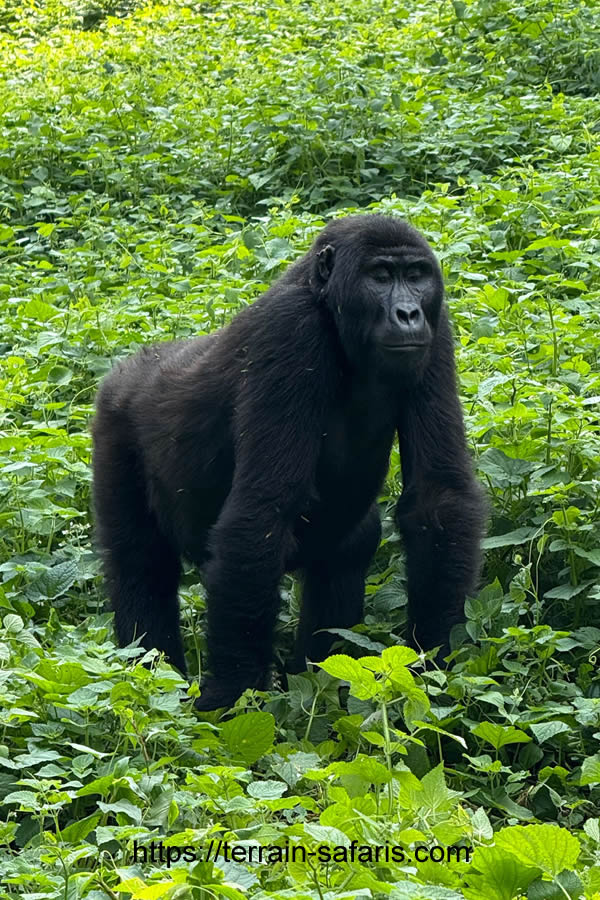
Standard gorilla trekking in Uganda offers one of the great wildlife encounters in the world: a single, carefully regulated hour in the company of a mountain gorilla family. For many visitors, that hour passes remarkably quickly. Bwindi Impenetrable National Park offers a rare alternative for those who wish to stay longer. The Gorilla Habituation Experience allows a small group of visitors to spend up to four hours with a gorilla family that is still being accustomed to human presence, alongside the researchers and trackers who carry out the work. This guide explains what habituation is, how the experience differs from a standard trek, and what prospective visitors should know before booking.
What Is Gorilla Habituation?
Habituation is the gradual process of teaching a wild gorilla family to tolerate the presence of humans without fear or aggression. It is the foundation of gorilla tourism, since a family must be comfortable with observers before it can be visited safely and responsibly. The process is slow and painstaking, and it is commonly described as taking around two to three years for a group to become fully accustomed to people.
In practice, a team of trained trackers and researchers visits the chosen family on a daily basis. They begin by observing from a distance, and over time they move gradually closer, behaving calmly and predictably so that the gorillas learn that humans pose no threat. Trackers often use low vocalisations that mimic gorilla communication to signal peaceful intent. Throughout the process, the gorillas are monitored for signs of stress, and the pace is adjusted accordingly. When the family is judged to be sufficiently at ease, it may be opened to regular tourism.
This work is not only a prerequisite for tourism. It also supports conservation, as habituated families are closely monitored and protected, and the revenue from tourism helps to fund the rangers, veterinarians, and community programmes that safeguard the species.
Where the Experience Takes Place
The Gorilla Habituation Experience is available only in the Rushaga sector, in the south of Bwindi Impenetrable National Park. Rushaga is also the sector with the largest number of habituated gorilla families, and it is generally reached by road from the Kigali border or from the Kabale area, making it one of the more accessible parts of the park for travellers combining Uganda with Rwanda.
Bwindi itself is a UNESCO World Heritage Site, and its dense, ancient forest shelters roughly half of the world’s remaining mountain gorillas. The terrain is steep and often muddy, and the forest’s name is well earned. The experience takes place within this setting, and visitors should be prepared for the physical demands that it brings.
How It Differs From a Standard Trek
The difference between a standard gorilla trek and the habituation experience can be summarised in three points: time, group size, and the nature of the encounter.
On a standard permit, a group of up to eight visitors spends one hour with a fully habituated family. On a habituation permit, a much smaller group, commonly limited to four visitors per family, may spend up to four hours with a semi-habituated family. The reduced numbers make for a quieter and more intimate experience, and the longer duration allows visitors to observe behaviour that is rarely seen in a single hour, including feeding, grooming, play, and the subtle dynamics between the silverback, females, and juveniles.
Because the gorillas in question are still becoming accustomed to people, visitors accompany the research team rather than simply visiting a finished product. Many operators describe this as a “backstage” view of conservation, offering a direct understanding of how gorilla tourism is built. It is an experience valued particularly by photographers, repeat visitors, and those with a serious interest in primate behaviour and conservation.
What to Expect on the Day
A habituation day typically begins early, with a briefing at the park headquarters, followed by a transfer to the trailhead and a hike into the forest to locate the family. Reports indicate that the hike to find a gorilla family in Bwindi can take anywhere from about thirty minutes to several hours in each direction, depending on where the animals have moved overnight. Once the group is located, visitors may spend up to four hours with them, and the full day commonly lasts between six and ten hours.
During this time, visitors are expected to follow the guidance of the rangers and researchers at all times. Standard gorilla etiquette applies: visitors should keep their voices low, avoid sudden movements, refrain from eating or drinking near the animals, and maintain the distance indicated by the guides. Because gorillas are susceptible to human respiratory illnesses, anyone who is unwell should not take part, and face masks are generally required. Flash photography is not permitted. Semi-habituated gorillas can be less predictable than fully habituated families, and visitors should accept that the rangers’ instructions take precedence in every situation.
Fitness and Eligibility
The habituation experience is more demanding than a standard trek, both because of the longer day and because the gorillas may move through difficult terrain while the group follows. A reasonable level of fitness is advisable, along with comfortable, sturdy hiking boots and a willingness to walk for several hours on steep, uneven ground. Porters can be hired to carry bags and to assist on difficult sections, and doing so also supports the local community.
The minimum age for participation is generally 15 years, in line with standard gorilla trekking regulations. Visitors with health concerns or mobility limitations should discuss their situation with an experienced operator before booking, so that realistic expectations can be set.
Permit Costs and Booking
The habituation permit is priced well above a standard trekking permit. At the time of writing, most sources indicate a fee of USD 1,500 per person for foreign non-residents, compared with USD 800 for a standard trek. The higher price reflects the longer duration, the smaller group size, and the additional resources involved in the habituation process.
Visitors should be aware that an increase has been announced. Recent sources indicate that the fee is expected to rise to USD 1,800 for foreign non-residents, with a correspondingly higher rate for foreign residents, though sources differ on the exact date at which the new rate takes effect. We would therefore urge prospective visitors to confirm the current fee directly with the Uganda Wildlife Authority or a licensed tour operator before making any commitment.
Availability is extremely limited, as only a small number of habituation permits are issued each day. Permits are issued by the Uganda Wildlife Authority and are commonly booked through licensed tour operators, and we would recommend booking as far in advance as possible, particularly for the peak months of June to September and December to February. Permits are generally non-refundable, so it is sensible to confirm travel dates before purchasing.
Is It Worth the Premium?
Whether the habituation experience is worth the additional cost depends on the visitor’s priorities. For those seeking a first encounter with mountain gorillas, a standard trek provides an outstanding experience at a lower price, and the extra cost may not be necessary. For photographers, who benefit from additional time to wait for good light and behaviour, and for visitors who have already trekked gorillas and want something deeper, the habituation experience offers considerable value.
It is also worth remembering that the fee contributes directly to conservation. Revenue from permits supports anti-poaching patrols, veterinary care, and community development in the villages around the park, so the premium paid by visitors has a tangible impact beyond the experience itself.
Planning Your Visit
A habituation experience is typically built into a multi-day itinerary based in or near Rushaga, with accommodation ranging from comfortable mid-range lodges to high-end properties. Many visitors choose to combine it with a standard trek in another sector, or with other Ugandan highlights such as Lake Bunyonyi, Queen Elizabeth National Park, or birding in the Ruhija sector of Bwindi. Travellers should bring layers for changeable mountain weather, waterproof clothing, gardening gloves for gripping vegetation, and a camera suited to low light beneath the forest canopy.
Conclusion
The Gorilla Habituation Experience in Bwindi Impenetrable Forest offers a rare chance to move beyond the single hour of a standard trek and to witness gorilla behaviour at a more relaxed, unhurried pace. It is a physically demanding and premium-priced option, and it requires early planning, but for those who value depth over convenience it can be among the most rewarding wildlife experiences in Africa. Approached with preparation, respect for the animals, and a clear understanding of the associated costs, a day with the habituating gorilla families of Rushaga is a privilege that few travellers will forget.