- admin
- November 22, 2026
- Our Blog
Our Blog
The Great Wildebeest Migration Safaris in Tanzania
Few wildlife events can rival the scale and drama of the Great Wildebeest Migration. Each year, well over a million wildebeest, accompanied by large numbers of zebra and gazelle, travel in a vast circular journey through the Serengeti ecosystem of northern Tanzania and into the Maasai Mara of southern Kenya. The movement is driven by the search for fresh grazing and water, and it has continued for countless generations. For visitors, a migration safari offers an extraordinary opportunity to witness one of the planet’s great natural spectacles. This guide explains how the migration unfolds across the year, where to go at different times, and what to consider when planning a safari.
Understanding the Migration
The most important point to understand is that the Great Migration is not a single event at a single moment. It is a continuous, year-round movement that follows the rains and the new grass they bring. The herds are present in the Serengeti throughout the year, and there is no single “best” month that suits every traveller. Rather, each season offers its own distinct phase of the cycle, and the right time to visit depends on what a traveller most wishes to see.
Because the movement follows rainfall, it cannot be tied to a fixed calendar. Operators and guides generally describe the broad seasonal pattern with confidence, but the exact location of the herds in any given week varies from year to year. Visitors should treat the timings in this guide as reliable general patterns, not as guarantees, and should plan with a degree of flexibility.
January to March: Calving on the Southern Plains
The migration cycle is often described as beginning in the southern Serengeti and the Ndutu region, where the herds gather on the short-grass plains in the early months of the year. Fresh grass follows the short rains, and the wildebeest give birth in a concentrated period, generally from late January through to March, with February often regarded as the peak. A great many calves are born within a few weeks, a strategy that overwhelms predators and improves the odds of survival for the young.
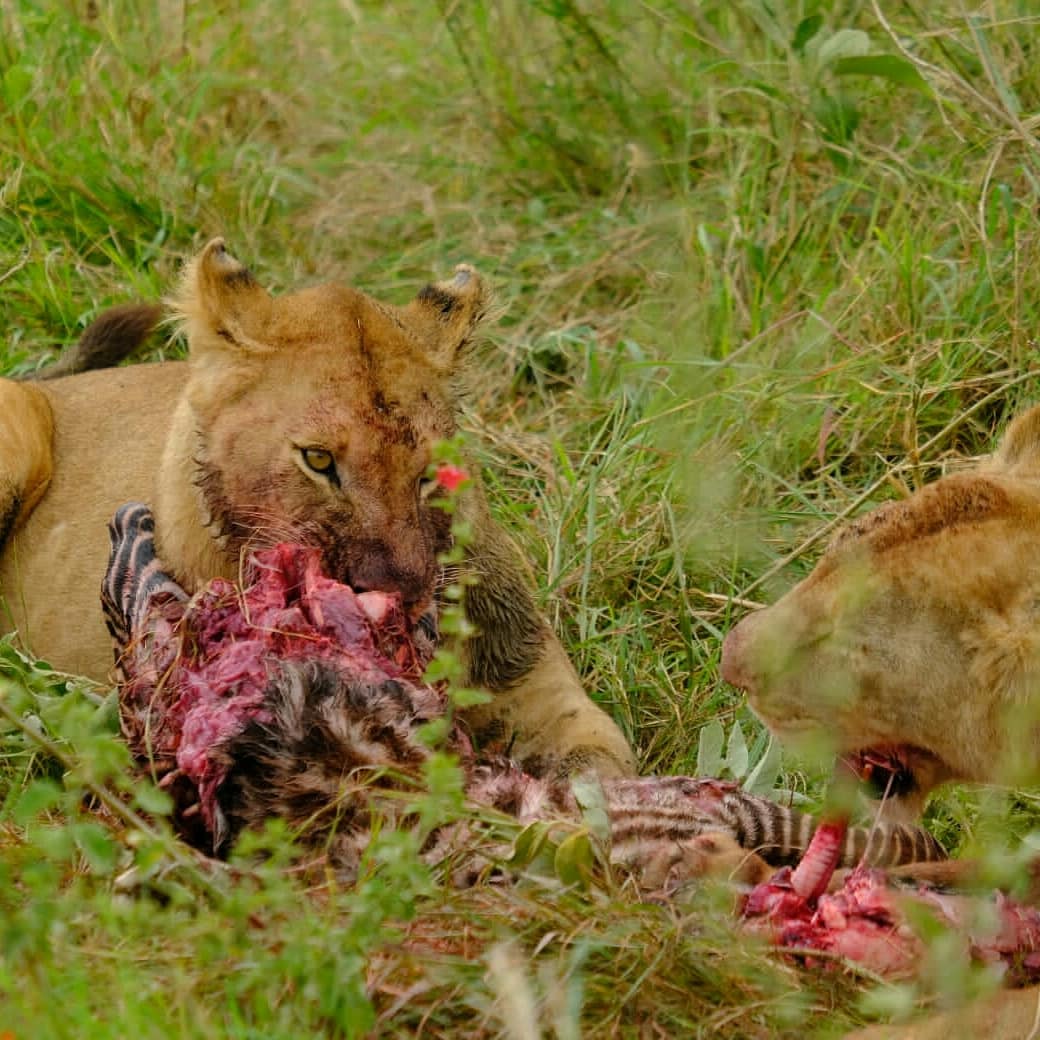
This is an especially rewarding time for predator viewing, as lions, hyenas, and cheetahs are drawn to the abundance of newborn animals. It is also a quieter season than the river-crossing months, and it appeals to travellers who value new life, dramatic wildlife interactions, and generally lower visitor numbers. Safaris at this time are often based around the Ndutu area and combined with the nearby Ngorongoro Conservation Area.
April to May: The Central Serengeti and the Long Rains
As the long rains arrive, the herds begin to move north-west through the central Serengeti, around the Seronera region, and onwards towards the western corridor. The landscape is lush and green, the herds are often spread widely across the plains, and the skies are frequently dramatic. This is generally the quietest period for tourism, and many camps offer reduced rates.
The green season is not without its appeal. Birdlife is abundant, the scenery is at its most vivid, and the herds are still present in large numbers, even if they are less concentrated than at other times of year. Travellers who prefer solitude and value for money may find this an attractive time to visit, provided they are prepared for the possibility of rain and for some tracks becoming difficult.
June to July: The Western Corridor and the Grumeti River
From around June, the herds typically move through the western corridor of the Serengeti, where they encounter the Grumeti River. Crossings here can be dramatic, with crocodiles waiting in the water, and they are often regarded as a lesser-known but rewarding alternative to the better-known Mara River. Sources generally place the Grumeti crossings between about May or June and early July, although the timing varies and there is no fixed schedule for the western corridor.
This phase offers a good opportunity to witness river crossings with fewer vehicles and a quieter atmosphere. It is also a useful period for travellers who wish to experience the migration in the lead-up to peak season.
July to October: The Mara River Crossings
The period from July to October is the one most travellers have in mind when they think of the migration. During these months, the herds gather in the northern Serengeti, around Kogatende and the Lamai area, and attempt the crossing of the Mara River to reach the grasslands of the Maasai Mara. The crossings are among the most dramatic scenes in nature, with thousands of animals plunging into the river while crocodiles lie in wait.
August and September are most often cited as the most reliable months for witnessing a crossing, though the season is generally described as running from July to October. It is important to note that crossings cannot be predicted with certainty. The herds may gather at the riverbank for hours or days before crossing, and they may on occasion turn back. Experienced operators therefore recommend allowing several days in the northern Serengeti, as spending more time in the area improves the likelihood of seeing at least one crossing. This is also the most popular and highest-priced period of the year, so early booking is essential.
A further point is worth emphasising: a large portion of the herds remains on the Tanzanian side of the Mara River, so a visitor does not need to travel to Kenya to experience the migration at its most dramatic.
November to December: The Return South
From November, the short rains begin, and the herds start to make their way back south through the eastern Serengeti towards the southern plains, completing the circle. Crossings during this period are sporadic and the herds disperse as they travel. This is a quieter time to visit, with lush scenery returning to the plains, and it is often an excellent period for travellers seeking good value. By December, the first herds are again gathering on the southern plains in anticipation of the calving season.
Choosing Where to Stay
Because the herds move, the choice of base matters considerably. Visitors seeking the calving season will generally stay in the Ndutu area or the southern Serengeti. Those seeking the central Serengeti in the green season often base themselves around Seronera, which also offers reliable year-round game viewing. Travellers hoping to see the Grumeti crossings will look to the western corridor, while those targeting the Mara River will stay in the northern Serengeti, close to Kogatende.
Accommodation ranges from permanent lodges to seasonal tented camps. Many of the smaller camps are mobile, meaning they relocate during the year to follow the herds, which allows guests to stay close to the action. These camps are often limited in capacity and sell out well in advance, and the best northern Serengeti camps are widely recommended to be booked nine to twelve months ahead for peak season.
Planning a Migration Safari
A well-planned migration safari generally involves several considerations. We would recommend allowing at least five to seven days, so that travellers can follow the herds without rushing and can build in time for other highlights. Many itineraries combine the Serengeti with Tarangire National Park, known for its elephants and baobab trees, and the Ngorongoro Crater, a volcanic caldera that supports dense wildlife populations.
Travellers should also consider the safari style that suits them. Guided game drives are the core of the experience, and many visitors also choose optional activities such as hot-air balloon flights over the central Serengeti, walking safaris in permitted areas, and visits to cultural communities. Prices vary widely depending on the season, the style of accommodation, and the length of stay, and park fees and regulations are subject to change, so we would recommend obtaining a detailed quotation from a licensed operator.
Visitors should bring neutral-coloured clothing, sun protection, a good pair of binoculars, and a camera with a telephoto lens. Layers are useful for cool early mornings, and a light rain jacket is advisable at any time of year. A reputable guide who knows where the herds are currently located is the single most valuable asset on a migration safari, and we would encourage travellers to choose their operator with care.
Responsible Viewing
The migration is a natural process, and visitors can play a part in protecting it. Guides should keep vehicles at a respectful distance during river crossings, avoid blocking the herds’ route, and follow park regulations at all times. Visitors should stay in the vehicle where instructed, avoid disturbing the animals, and choose operators and camps that contribute to conservation and to the communities living alongside the park.
Conclusion
The Great Wildebeest Migration is not a single event but a year-long journey, and each phase of the cycle offers something different, from the new life of the calving plains to the drama of the Mara River. By choosing a time of year that suits their interests, allowing sufficient time, and working with an experienced operator, travellers can look forward to one of the most memorable wildlife experiences available anywhere in the world. With careful planning and realistic expectations, a migration safari in Tanzania is a journey that stays with visitors long after they have returned home.