- admin
- October 22, 2026
- Our Blog
Our Blog
Lowland Gorilla Trekking in Congo
Most travellers who dream of meeting gorillas in the wild think first of the mountain gorillas of Uganda and Rwanda. Yet the forests of the Congo Basin shelter a different and far more numerous group of great apes: the lowland gorillas. Encountering them is a quieter, more remote, and in many ways more adventurous undertaking, and it is one that rewards careful planning. This guide introduces the two kinds of lowland gorilla found in the Congos, the places where they can be visited, and the practical and security considerations that every prospective traveller should weigh before committing to a journey.
Two Countries, Two Kinds of Lowland Gorilla
The word “Congo” can refer to two separate countries, and the distinction matters for gorilla trekking. The Democratic Republic of Congo (DRC) lies to the east and south, while the Republic of Congo, often called Congo-Brazzaville, lies to the west. Each is associated with a different lowland gorilla.
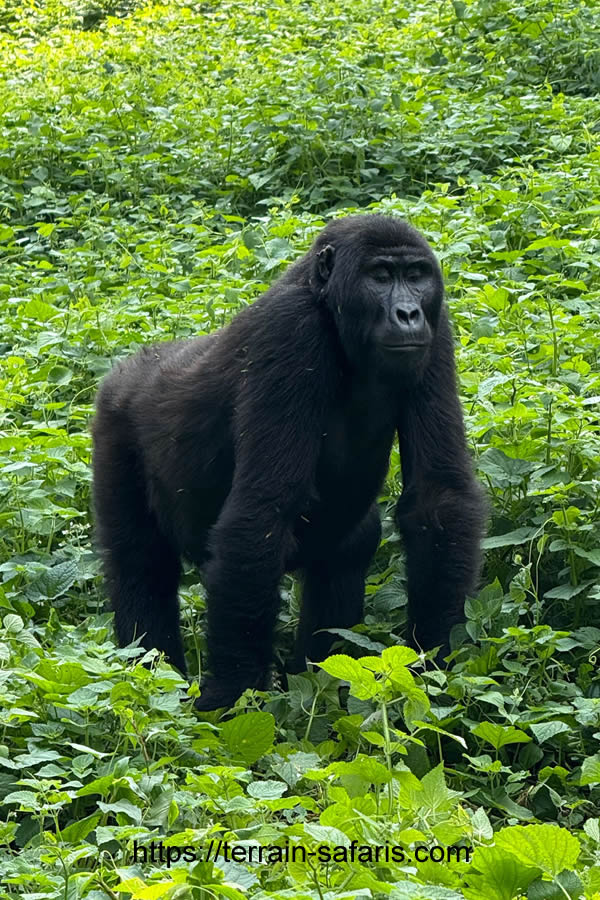
In the DRC, the eastern lowland gorilla, also known as Grauer’s gorilla, is found nowhere else in the world. It is the largest of all gorillas, and its stronghold has long been Kahuzi-Biega National Park, near the city of Bukavu and the shores of Lake Kivu. In the Republic of Congo, the western lowland gorilla is the species that visitors encounter, most notably in Odzala-Kokoua National Park. Western lowland gorillas are smaller than their eastern cousins and are the most numerous of all gorillas, though both groups are classified as Critically Endangered, facing pressures that include habitat loss, hunting, and disease.
Kahuzi-Biega National Park, Democratic Republic of Congo
Kahuzi-Biega takes its name from two extinct volcanoes, Mount Kahuzi and Mount Biega, and it is one of the larger protected areas in the DRC. Its terrain combines lowland and montane forest, and it has long been the only place where visitors could track Grauer’s gorillas with trained guides. Reports suggest that roughly 400 of these gorillas live within the park, spread across several groups, though estimates of the wider population vary between sources.
The trekking experience here follows the model established elsewhere in Africa. Visitors set out with trackers and rangers to locate a habituated family, and, once found, are permitted a single regulated hour of observation. Treks may last anywhere from one to six hours depending on where the group has moved, and the dense, often steep forest can make for demanding walking. International visitors have typically paid a permit fee of around USD 400, which is notably lower than the cost of a permit in Uganda or Rwanda, with reduced rates for residents and citizens of the region. A DRC tourist visa is also required.
An Important Note on Current Conditions
Prospective visitors must pay close attention to the security situation in eastern DRC. At the time of writing, several reputable sources report that gorilla trekking in Kahuzi-Biega, along with Virunga National Park, has been suspended because of armed conflict in the region, with access routes closed and staff evacuated. The park’s own visitor website has been reported as indicating a temporary closure. At the same time, some tour operators continue to advertise itineraries to the park, so the information available online is not always consistent.
We would therefore urge any traveller considering Kahuzi-Biega to consult the latest official travel advisories from their home government, to confirm the park’s status directly with the park authorities or a licensed operator, and to seek written confirmation before paying any deposit. Where conditions are uncertain, the responsible course is to wait. This is a destination of great promise once stability returns, but it is not one to approach without current, verified information.
Odzala-Kokoua National Park, Republic of Congo
For travellers who wish to meet lowland gorillas under more settled conditions, Odzala-Kokoua National Park in the Republic of Congo offers a compelling alternative. It is among Africa’s oldest protected areas, and it shelters a substantial population of western lowland gorillas alongside forest elephants, bongo antelope, and hundreds of bird species. The park is notable for its mosaic of dense rainforest, riverine forest, and open forest clearings known locally as “bais,” which attract wildlife and provide exceptional viewing opportunities.
Two distinct styles of gorilla encounter are available. The first is traditional trekking, in which small groups are guided into the forest from Ngaga Camp to find one of the habituated gorilla families. Reports indicate that two groups currently welcome visitors in this way, and that the search can take anywhere from about forty-five minutes to several hours before trackers locate the family. The second is gorilla watching from elevated treehouses overlooking forest clearings, where visitors wait quietly for unhabituated gorillas to emerge. This approach is reported to involve no fixed time limit, which gives it a patient and contemplative character quite different from the structured hour of a conventional trek.
Access to Odzala is deliberately limited, and only a few hundred visitors are said to see its gorillas each year. This exclusivity is part of the appeal, but it also means that costs tend to be considerably higher than elsewhere. Lodges in and around the park are generally positioned at the upper end of the market, and transfers typically involve light aircraft or long road journeys. Travellers should therefore expect a premium experience in exchange for a genuine sense of remoteness.
How Lowland Gorilla Trekking Differs From Mountain Gorilla Trekking
Visitors accustomed to the mountain gorilla experience of Uganda and Rwanda will find several differences. Lowland gorillas live in more varied and often denser habitats, ranging from swamp forest to clearings, and they tend to be more elusive and more widely dispersed. Because their families are generally less habituated and more cautious, sightings can be briefer and photography more challenging in the low light beneath the canopy.
The setting is also different. Instead of steep, misty mountain slopes, trekkers may find themselves in humid lowland forest, wading through swampy ground or negotiating tangled undergrowth. The atmosphere tends to be wilder and less polished, and the logistics more demanding. For many travellers, these very qualities are the attraction: an encounter with gorillas in the heart of the Congo Basin offers a rare glimpse of one of Africa’s last great wilderness areas.
When to Visit
Dry seasons generally offer the most comfortable trekking conditions, as trails are firmer and rainfall is lower. In Odzala, the drier periods broadly fall between December and February and again between June and August, although local conditions can vary and operators will advise on the best timing for a specific itinerary. Even in the dry season, forest humidity remains high, and visitors should prepare for warm, damp conditions and sudden showers.
Preparing for a Lowland Gorilla Trek
Preparation for a lowland trek is similar in spirit to that for any gorilla trek, with some added attention to the humid environment. Sturdy, waterproof walking boots, long trousers, long-sleeved shirts, and gardening gloves are all advisable, along with a lightweight rain jacket and insect repellent. A moderate level of fitness is helpful, and we would recommend informing your operator in advance of any mobility concerns.
Standard gorilla etiquette applies throughout. Visitors are generally required to keep a minimum distance from the animals, avoid eating or drinking near them, and wear a face mask or avoid trekking when unwell, since gorillas are susceptible to human respiratory illnesses. Health precautions for travel to the region, including vaccinations and malaria prophylaxis, should be discussed with a medical professional well before departure, and entry requirements for each country should be confirmed in advance.
Choosing the Right Destination
For travellers who place a premium on remoteness, exclusivity, and the opportunity to experience a lesser-visited corner of Africa, the Republic of Congo’s Odzala-Kokoua offers a rare and memorable encounter with western lowland gorillas. For those drawn to Grauer’s gorilla, the largest of all, Kahuzi-Biega remains a destination of exceptional conservation importance, but its availability depends on security conditions that can change quickly.
Travellers who prefer more predictable logistics and an established visitor infrastructure may find Uganda or Rwanda a more suitable choice for their first gorilla trek, with the possibility of returning to the Congo Basin on a later journey. Whichever route you choose, working with a reputable, licensed operator and keeping a close eye on current advisories will help ensure that your experience is both safe and responsible.
Conclusion
Lowland gorilla trekking in Congo is an adventure of a different order from the mountain gorilla experiences of East Africa. It asks more of the traveller in terms of preparation, flexibility, and expense, but it offers in return an encounter with some of the planet’s most remarkable and most threatened great apes in some of its most remote forests. With careful research, realistic expectations, and respect for both the animals and the communities that protect them, a journey to the Congo’s lowland gorillas can be among the most rewarding wildlife experiences available anywhere.