- admin
- August 29, 2026
- Our Blog
Terrain Safaris
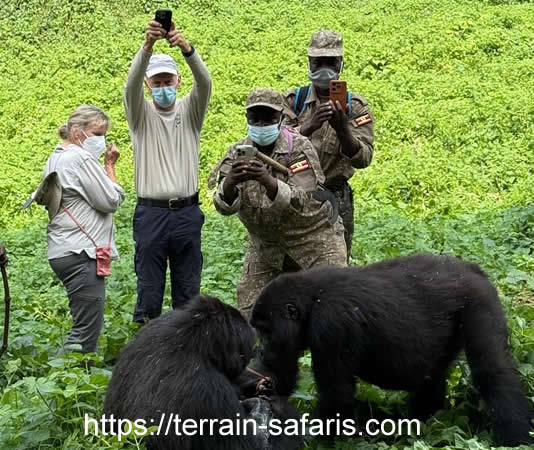
For many travellers planning a journey to East Africa, spending time with a wild mountain gorilla family is the centrepiece of the trip. Uganda and Rwanda are the two most popular destinations for this experience, and both offer world-class opportunities to observe these endangered primates in their natural habitat through well-established Uganda Gorilla Trekking Adventures and Rwanda Gorilla Trekking Tours. However, the two countries differ meaningfully in permit cost, terrain, and overall trip logistics. This guide outlines those differences to help you determine which destination best suits your budget, fitness level, and travel style.
Permit Costs: A Significant Point of Difference
Permit pricing is often the first, and most decisive, factor travelers consider, and here the two countries diverge considerably.
Uganda issues gorilla trekking permits through the Uganda Wildlife Authority (UWA) for treks in Bwindi Impenetrable National Park and Mgahinga Gorilla National Park, the two destinations at the heart of most Uganda Gorilla Trekking Adventures. As of the current tariff, a standard permit costs USD 800 per person for foreign non-residents, USD 700 for foreign residents, and roughly USD 500 for citizens of other African countries, with a considerably lower rate for East African citizens. Uganda has also introduced a discounted low-season rate of USD 600 for foreign non-residents during April, May, and November, though these discounted permits typically cannot be rescheduled if travel plans change.
Rwanda, by comparison, prices its permits for Volcanoes National Park at USD 1,500 per person for foreign non-residents, nearly double the Ugandan rate. Operators offering Rwanda Gorilla Trekking Trips typically build this permit cost into their packages from the outset, given how central it is to overall trip budgeting. Reduced rates of roughly USD 200 to 500 apply to East African citizens, other African nationals, and foreign residents, respectively.
For travellers prioritising value, Uganda offers a substantially more affordable route to the same fundamental experience: one hour observing a habituated gorilla family in the wild, accompanied by trained guides and armed rangers. That said, the permit fee is only one component of the overall trip cost, and the difference in accommodation, transport, and logistics between the two countries can offset some of this gap, as discussed below. It’s also worth noting that both countries revise their tariffs periodically, so we would recommend confirming current pricing directly with the relevant wildlife authority or a licensed tour operator before booking.
Terrain and Trekking Difficulty
Terrain is where the two destinations diverge most sharply in the actual on-the-ground experience, and it deserves careful consideration, particularly for travelers with limited hiking experience or physical constraints.
Uganda’s Bwindi Impenetrable National Park lives up to its name. The park sits across a range of altitudes, generally between 1,160 and 2,600 metres, and its forest is dense, hilly, and often muddy, especially outside the driest months. Trails are not maintained to the standard of formal footpaths; trekkers frequently navigate steep, uneven slopes, tangled vegetation, and slippery ground, sometimes for several hours before reaching a gorilla family. This can make for a physically demanding day, and porters are commonly hired, both to assist with the climb and to support the local community. In exchange for this effort, Bwindi’s dense forest offers a particularly immersive, wild experience.
Rwanda’s Volcanoes National Park, part of the same Virunga Massif that extends into Uganda and the Democratic Republic of Congo, tends to offer comparatively gentler terrain, particularly for several of its gorilla groups that reside at lower, more accessible elevations on the volcanic slopes. That said, terrain in Volcanoes National Park varies by gorilla family; some groups still require a demanding climb through bamboo forest and volcanic soil. As a general pattern, however, many operators and past visitors describe the average Rwanda trek as somewhat less strenuous than the typical Bwindi trek, which can make it an appealing choice for travellers seeking a shorter or more moderate hike.
In both countries, actual trekking time varies considerably and cannot be guaranteed in advance, since gorilla families move throughout the forest and the exact hike length depends on where the group is located on a given day. Prospective trekkers with mobility concerns should discuss fitness level honestly with their tour operator, who can request an easier gorilla family where such accommodations are possible.
Logistics and Accessibility
Logistics is the third major consideration, and it is closely tied to geography.
Rwanda holds a clear advantage in convenience. Volcanoes National Park lies roughly two to three hours by road from Kigali International Airport, along well-maintained tarmac roads. This makes Rwanda an appealing option for travelers with limited time, including those combining gorilla trekking with a short stopover between other travel plans, or those who prefer to minimize time spent on long road transfers.
Uganda’s gorilla trekking parks are more remote relative to the country’s main international airport at Entebbe. Bwindi Impenetrable National Park is typically reached by a road journey of eight to nine hours from Kampala or Entebbe, or a shorter drive of several hours from other southwestern hubs. Many travelers instead opt for a domestic flight to an airstrip near the park, which reduces the journey to roughly an hour or so, though at additional cost. Mgahinga Gorilla National Park, Uganda’s other gorilla trekking site, lies close to the Rwandan border and can sometimes be paired with a Rwanda itinerary for travelers seeking to visit both countries.
For travelers with flexible schedules who value the broader Ugandan travel experience, the additional transfer time also brings rewards: Uganda’s gorilla parks are frequently combined with visits to other attractions, such as chimpanzee tracking in Kibale Forest, wildlife viewing in Queen Elizabeth National Park, or specialist Uganda Birding Tours through Ruhija’s Mubwindi Swamp, making for a richer, multi-destination safari itinerary. Rwanda, being a considerably smaller country, offers a more compact itinerary, often combined with a visit to Nyungwe Forest for chimpanzee tracking and increasingly popular Rwanda Bird Watching Trips, or the Kigali Genocide Memorial for a culturally significant addition to the trip.
Both countries require the East African Tourist Visa or equivalent entry documentation, and the East African Tourist Visa itself conveniently covers Uganda, Rwanda, and Kenya under a single multiple-entry visa, which can simplify a combined itinerary for travelers wishing to experience both destinations.
Weighing the Overall Experience
Beyond cost, terrain, and logistics, a few additional factors are worth mentioning.
Both countries offer accommodation across a wide range of budgets, from modest guesthouses to high-end luxury lodges, and the gorilla trekking experience itself, one hour with a habituated family under professional guidance, is comparable in substance between the two. Group sizes, trek duration limits, and conservation regulations are similarly structured in both parks, reflecting shared international conservation standards for mountain gorilla tourism.
Rwanda has, in recent years, positioned itself somewhat more toward the premium end of the safari market, with correspondingly higher accommodation rates in some cases, whereas Uganda offers a broader range of budget and mid-range options alongside its luxury properties. Travelers should weigh their overall budget across permits, accommodation, and transport together, rather than focusing on permit cost in isolation.
A Summary Comparison
| Factor | Uganda (Bwindi) | Rwanda (Volcanoes NP) |
|---|---|---|
| Standard permit cost (foreign non-resident) | Approximately USD 800 | Approximately USD 1,500 |
| Terrain | Steep, dense, often demanding | Generally more moderate, varies by group |
| Distance from main airport | Approximately 8–9 hours by road, or a short flight | Approximately 2–3 hours by road |
| Itinerary style | Well suited to longer, multi-destination safaris | Well suited to shorter, more compact trips |
Our Recommendation
There is no universally “better” choice between the two destinations; the right decision depends on your priorities. Travelers seeking the most cost-effective permit, a longer and more immersive multi-park safari, and who are comfortable with a physically demanding hike and longer road transfers will likely find Uganda the better fit. Travelers with limited time, a preference for shorter transfers, and a willingness to pay a premium for streamlined logistics may find Rwanda more appealing.
Whichever destination you choose, we would encourage booking permits well in advance, as availability is limited in both countries, and working with a reputable, licensed tour operator to confirm current pricing, terrain conditions for specific gorilla families, and any recent regulatory changes. Many travelers also choose to extend their trip with complementary Uganda Birding Tours or Rwanda Bird Watching Trips, both of which showcase the region’s exceptional Albertine Rift birdlife alongside its primates. Either way, the opportunity to observe a wild mountain gorilla family at close range remains one of the most extraordinary wildlife experiences available anywhere in the world.