- admin
- October 30, 2026
- Our Blog
Our Blog
Exploring the Ndutu Wildebeest Calving Plains
Each year, in the early months of the calendar, one of the most remarkable events in the natural world unfolds on a stretch of open grassland in northern Tanzania. Hundreds of thousands of wildebeest gather on the short-grass plains around Ndutu to give birth, and within a few weeks the landscape is transformed by a tide of newborn calves. For visitors, this period offers a different perspective on the Great Migration from the dramatic river crossings that attract most of the attention. It is a season of new life, tender moments, and, inevitably, intense predator activity. This guide introduces the Ndutu calving plains, explains why the wildebeest return to them each year, and offers practical advice for those wishing to witness the spectacle.
Where Is Ndutu?
Ndutu lies in the south of the greater Serengeti ecosystem, on the boundary between Serengeti National Park and the Ngorongoro Conservation Area. It is a region of open short-grass plains, scattered acacia woodland, and the shallow, alkaline Lake Ndutu, and it forms part of a wider landscape that includes the Moru Kopjes, the Gol Mountains, and plains stretching south towards Kakesio.
The area’s position on an administrative border is worth understanding, since it affects how safaris are sold and priced. Ecologically, Ndutu is part of the Serengeti, and it is often marketed as the southern Serengeti. Administratively, however, much of it falls within the Ngorongoro Conservation Area, which determines the park fees payable. The wildebeest, naturally, pay no attention to such boundaries, and during the calving months the herds move freely across the plains as grazing and rainfall dictate.
Why the Wildebeest Return
The Great Migration is a continuous, year-round movement of roughly one and a half to two million wildebeest, accompanied by large numbers of zebra and gazelle, in search of fresh grazing. The calving season marks the point in this cycle when the herds return to the southern plains, drawn by the first rains and the new growth of nutritious grass.
The southern plains are particularly well suited to this purpose. Their soils are volcanic, formed from deposits laid down by the Ngorongoro highlands and by ash from the active volcano Ol Doinyo Lengai to the east. These soils support short, mineral-rich grasses that are valuable to nursing mothers. The open terrain also offers a measure of safety, since predators can be seen approaching from a distance. Wildebeest remain on these plains until the end of the long rains, typically around late April or early May, before beginning their journey north and west towards the Serengeti’s western corridor.
The Rhythm of the Calving Season
The calving season is generally described as running from late December or January through to March, though the greatest concentration of births occurs within a much shorter window. Sources commonly indicate that more than eighty percent of fertile females give birth within a few weeks of one another, usually between late January and mid-March, with February recognised as the peak. Estimates of the number of calves born in a major season range from about 300,000 to 500,000, a figure that is difficult to grasp until one sees the plains in person.
In December and early January, the herds begin to gather on the southern plains around Ndutu, Kusini, and Naabi, and visitors may be rewarded with early calving sightings. By February, the plains are densely populated with wildebeest, and newborn calves can be seen everywhere, often struggling to their feet within minutes of birth. By March, the calves are stronger and more independent, and the herds begin to disperse as the grasses dry and the animals move in search of fresh pasture.
The synchronised timing of births is a notable evolutionary strategy. By producing so many calves in a short period, the herd overwhelms the capacity of predators to take them all, increasing the proportion of young that survive. It is a striking example of safety in numbers, and one that visitors can appreciate at first hand.
Predators and the Drama of the Plains
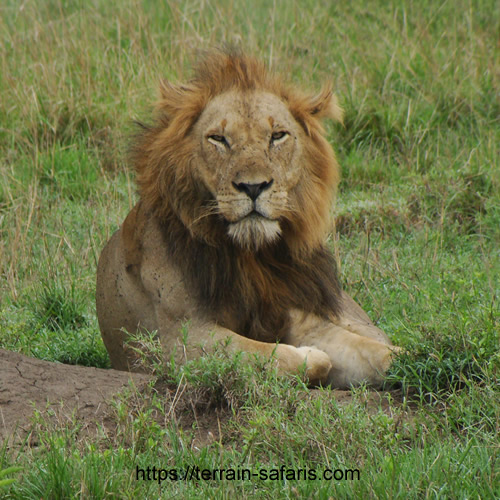
The abundance of vulnerable young animals draws predators from across the region, and the calving plains are widely regarded as offering some of the best predator viewing in East Africa. Lions are frequently seen in the area, as are spotted hyenas, which are efficient hunters in their own right. Cheetahs find the open plains particularly suitable, and February is often cited as an especially good time to observe them. Leopards, jackals, and various raptors may also be encountered, and the lake and woodland areas add further variety.
It is worth approaching this aspect of the safari with realistic and respectful expectations. Predation is a natural and essential part of the ecosystem, and visitors may witness scenes that are moving or difficult to watch. Experienced guides will position vehicles to allow good viewing while keeping a respectful distance and minimising disturbance. Those who value the experience of watching natural processes unfold, rather than seeking a guaranteed outcome, will generally find the calving season rewarding.
Beyond the Wildebeest
Although the calving herds are the main attraction, the Ndutu area offers considerable variety. Zebra and Thomson’s and Grant’s gazelles also give birth during this period, and many other animals can be seen across the plains and in the surrounding woodlands. The shallow lakes in the area are known for attracting flamingos and other water birds, and the varied habitats reward visitors with an interest in birdlife.
The scenery in itself is memorable. In the rainy months, the plains are green, the skies are often dramatic, and afternoon showers give the light a distinctive quality that photographers particularly appreciate. Temperatures in February are generally warm, with highs in the high twenties Celsius, though shade on the open plains is limited.
Combining Ndutu With Other Destinations
Ndutu is typically visited as part of a wider northern Tanzania circuit. Its proximity to the Ngorongoro Conservation Area makes it a natural companion to a visit to the Ngorongoro Crater, a vast volcanic caldera known for its dense wildlife populations, including black rhino and large lions. Many itineraries also include Tarangire National Park, which is particularly noted for its elephants and baobab trees, as well as the central Serengeti around Seronera for additional big-game viewing.
A stay of three to four nights in the Ndutu area is commonly recommended, which allows time to follow the herds and to experience different parts of the plains at different times of day. Visitors may wish to base themselves partly in Ndutu and partly on the Ngorongoro Crater rim or in the central Serengeti, so as to combine the calving season with other highlights.
Accommodation and Practicalities
Accommodation in the Ndutu area ranges from established lodges to seasonal tented camps, some of which operate only during the calving months. Because supply is limited and demand is high during the peak weeks, we would strongly recommend booking well in advance, often many months ahead, particularly for stays in February.
Visitors should bring sun protection, including a wide-brimmed hat and sunscreen, as well as light layers for cooler mornings and evenings and a light rain jacket for afternoon showers. Binoculars and a camera with a good telephoto lens will enhance the experience considerably. As with all safaris, visitors should follow the guidance of their guide, remain inside the vehicle where instructed, and respect the animals’ space.
It is also advisable to remember that the movements of the herds depend on rainfall and grazing, and that they vary from year to year. Timing is therefore approximate, and we would recommend consulting a reputable operator close to the date of travel for the latest information on where the herds are concentrated. Park fees, regulations, and accommodation rates are subject to change and should be confirmed in advance.
Conclusion
The Ndutu calving plains offer one of the most affecting wildlife experiences in Africa, combining scenes of new life with the unfiltered realities of the natural world. For visitors, it is an opportunity to witness a vital stage of the Great Migration in a setting that is typically quieter than the river-crossing season, and to see the Serengeti ecosystem in one of its most productive and dynamic phases. With careful planning, an experienced guide, and an appreciation of the natural cycle at work, a visit to Ndutu during calving season can be among the most rewarding journeys a safari traveller will ever make.