Birding Tours in Uganda – Terrain Safaris
Uganda has earned its reputation as one of Africa’s premier birding destinations, and for good reason. Despite covering just over 241,000 square kilometers, the country hosts more than 1,070 recorded bird species, roughly half of Africa’s total bird diversity, packed into a landscape that shifts from Afromontane forest to papyrus swamp to savanna within a few hours’ drive. This concentration of habitats, sitting at the convergence of the East African savanna, the Central African rainforest, and the Albertine Rift, is what draws serious birders from around the world, along with the promise of localized specials found almost nowhere else.
The country’s appeal rests on three pillars: species count, accessibility, and the presence of highly sought “megatick” birds. Chief among these is the shoebill, a prehistoric-looking stork relative with a massive clog-shaped bill, found in a handful of swamps. Uganda also holds 24 of the 27 Albertine Rift endemics, birds found nowhere else on Earth, concentrated in the forests along the western border with the Democratic Republic of Congo. Add to this a well-developed network of birding guides, lodges built specifically with birders in mind, and relatively short travel distances between sites, and you have a country where a two-to-three-week trip can realistically yield 500 or more species.
Structuring a birding tour
Most birding tours in Uganda run between 10 and 21 days and are organized around a loop that typically starts in Entebbe or Kampala, heads west through Kibale and the Rwenzori foothills, continues to the Bwindi–Queen Elizabeth corridor, and often finishes with a swing north to Murchison Falls before returning to the capital. Specialist operators build itineraries around specific target lists, with dawn starts, forest trail walks, canopy walkways, boat trips, and swamp treks all featuring depending on the site. Guides carry portable speakers for playback of calls (used sparingly and responsibly at reputable operations) and many now use eBird and eBird Uganda hotspot data to plan routes around recent sightings.
The dry seasons, December to February and June to August, are generally considered the best windows. Trails are easier to walk, migrants from Europe and Asia swell the species counts (especially November through March), and swamp levels make boat access more reliable. That said, birding in Uganda is rewarding nearly year-round, and the wetter months bring their own advantages, such as breeding plumage in many species and fewer crowds at the major parks.
What a typical day looks like
A birding day usually begins before sunrise, since many forest species are most vocal and active in the first two hours of light. Birders head out with local guides who know call patterns intimately, often walking slowly along forest trails or riverine paths, stopping frequently. Midday tends to be quieter, used for travel between sites or rest, with activity picking up again in late afternoon. Boat-based birding, particularly on the Kazinga Channel or in papyrus swamps, can happen at almost any time of day and offers a different set of species than forest walks, including herons, kingfishers, and waterfowl.
Bwindi Impenetrable National Park — Best known for mountain gorillas, but for birders it is arguably Uganda’s top single site, holding the highest concentration of Albertine Rift endemics anywhere in the country. Species such as the African green broadbill, Shelley’s crimsonwing, and Grauer’s rush warbler draw dedicated birders, and the Ruhija sector in particular is treated almost as a pilgrimage site.
Mabamba Bay Wetland — A papyrus swamp on the shores of Lake Victoria, less than two hours from Entebbe, and the most reliable place in the country to see the shoebill in the wild. Canoe trips glide quietly through channels, and beyond the shoebill, the swamp hosts African jacana, blue-headed coucal, and papyrus gonolek. Its proximity to the airport makes it a common first or last stop on itineraries.
Queen Elizabeth National Park — Uganda’s most biodiverse savanna park, with over 600 recorded species. The Kazinga Channel boat cruise is a highlight, offering close views of pelicans, herons, and African skimmers alongside hippos and buffalo. The Maramagambo Forest and the Ishasha sector, famous for tree-climbing lions, add further habitat variety.
Kibale Forest National Park — Primarily known for chimpanzee tracking, Kibale is also outstanding for forest birding, with species like the green-breasted pitta (one of the continent’s most wanted birds), African pitta, and various greenbuls and illadopses. The nearby Bigodi Wetland Sanctuary, community-run, is a gentler and highly productive alternative for swamp and forest-edge species.
Semuliki National Park — An extension of the Congo Basin lowland rainforest reaching into Uganda’s far west, Semuliki hosts species typical of Central Africa found nowhere else in East Africa, including the yellow-throated cuckoo and Congo serpent eagle. The nearby Semuliki Wildlife Reserve and its hot springs add a distinctive Rift Valley landscape to the mix.
Murchison Falls National Park — Uganda’s largest park, straddling the Victoria Nile as it thunders through a narrow gorge. The riverine forest, savanna, and delta habitats support species such as the Nubian woodpecker, silverbird, and the localized Karamoja apalis in nearby dry-country patches. A boat trip toward the delta is also a strong spot for shoebill sightings.
Rwenzori Mountains National Park — For birders willing to hike, the lower slopes of the Rwenzoris (the fabled “Mountains of the Moon”) hold Albertine Rift specials at altitude, including the Rwenzori turaco, and a range of sunbirds adapted to the afro-alpine zone.
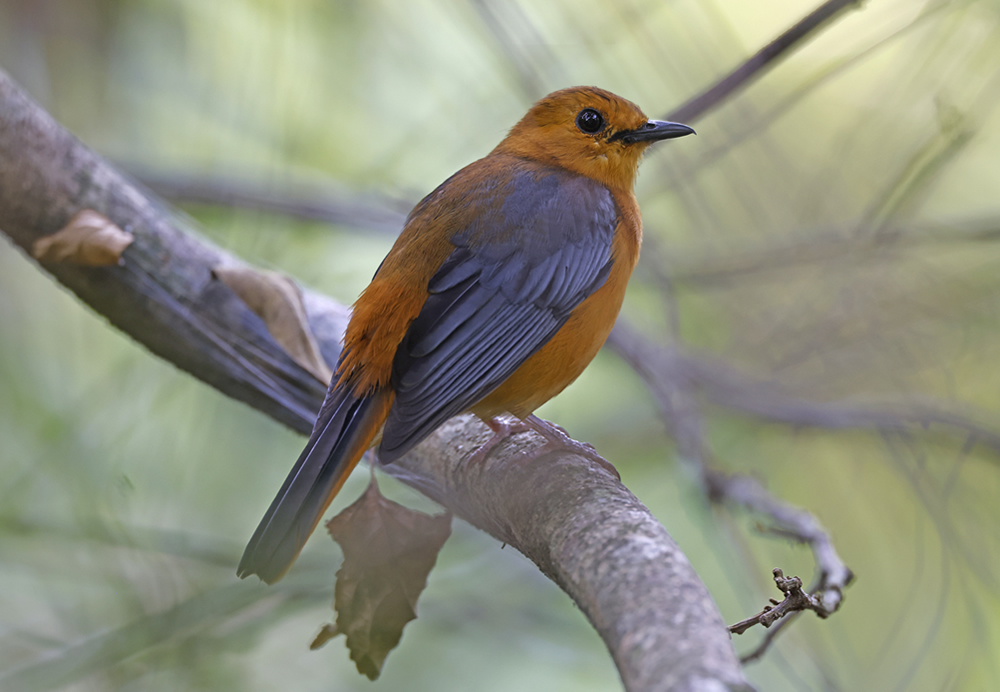
Lake Mburo National Park — Uganda’s smallest savanna park, notable for dry acacia woodland species not easily found elsewhere in the country, such as the red-faced barbet, a bird with a very restricted range. Boat trips on the lake add African finfoot and papyrus specialists to the list.
Budongo Forest Reserve — A large mid-altitude forest near Murchison Falls, valued for chimpanzee habituation but also strong for birding, with species such as the chocolate-backed kingfisher, Ituri batis, and Puvel’s illadopsis regularly reported along its network of trails.
Echuya Forest Reserve — A smaller, high-altitude bamboo and montane forest near Bwindi, worth a stop for the Albertine owlet and dusky turtle dove, species that are difficult to catch up with elsewhere.
Semliki Delta and Lake Albert flats — Often paired with Murchison or accessed separately, these open shoreline and grassland habitats are a good bet for the localized chapin’s flycatcher and various shorebird species during migration passage.
Practical notes
Most birders work with a licensed local guide, since many of Uganda’s key species are located by call rather than sight, and local guides carry an intimate familiarity with territories and seasonal movement that can be the difference between a brief glimpse and a missed bird entirely. Lodges near the major sites, several run by community organizations, often double as good birding ground themselves; many camps around Bwindi and Kibale report forest species right from the veranda.
Uganda’s birding infrastructure has matured substantially over the past decade, supported by community-run guiding associations, better roads into western Uganda, and growing interest from international birding tour companies. Combined with the country’s political stability relative to some of its Albertine Rift neighbors, and its manageable size, Uganda has become for many the most efficient place on the continent to build a serious African bird list in a single trip, while also offering gorilla and chimpanzee tracking as a bonus for travelers combining birding with broader wildlife interests.
Company
Explore Our Services
Lorem Ipsum is simply dumy text of the printing typesetting industry.