Uganda National Parks and Game Reserves
Uganda National Parks and Game Reserves
Uganda is a land of remarkable biodiversity, protected through a network of ten national parks and twelve wildlife reserves that showcase some of Africa’s most extraordinary natural treasures. It is no surprise that Sir Winston Churchill famously referred to Uganda as the “Pearl of Africa” – a title the country continues to earn through its breathtaking landscapes, rich ecosystems, and exceptional wildlife encounters.
Despite its relatively modest size of approximately 241,000 square kilometres – comparable to England – Uganda boasts an astonishing variety of habitats. The country is uniquely positioned at the meeting point of the lush, humid climate of the western tropics and the drier, semi-arid conditions of the north, creating one of the continent’s most ecologically diverse regions. This geographical blessing has given rise to an extraordinary density of flora and fauna within a comparatively compact area, setting Uganda apart from many of its larger East African neighbours and rewarding visitors with remarkable variety in a relatively short travel itinerary.
Uganda’s ten national parks and twelve wildlife reserves form a carefully conserved network of landscapes, each with its own character, ecological significance, and tourism appeal. Collectively, these protected areas safeguard an extraordinary range of wildlife — from the iconic mountain gorillas of the Albertine Rift to the tree-climbing lions of Ishasha, vast elephant herds roaming open savannah, rare and endemic bird species found nowhere else on the planet, and a remarkable diversity of primates that places Uganda among the richest primate-viewing destinations in the world.
Each park has been shaped by its own geology, climate, and history, ensuring that no two destinations offer quite the same experience. Whether travellers are navigating the dense, ancient jungles of Bwindi in search of gorillas, cruising the Nile beneath the thundering spray of Murchison Falls, or venturing into the remote and rugged wilderness of Kidepo Valley near the South Sudan border, Uganda consistently delivers encounters that feel both intimate and untouched — a quality increasingly rare in modern safari travel.
Uganda's National Parks
Mount Elgon National Park, centred on one of the world’s largest volcanic calderas, straddles the border with Kenya and offers excellent hiking amid waterfalls, caves, and hot springs. The park’s forested and moorland zones support a healthy population of birdlife and are an increasingly popular alternative for travellers seeking trekking experiences beyond the Rwenzoris.
Murchison Falls National Park
Uganda's largest national park, is defined by the mighty Nile River, which is forced through a narrow seven-metre gorge to create the spectacular Murchison Falls. The park supports healthy populations of elephant, giraffe, buffalo, and lion, alongside exceptional riverine birding, including regular sightings of the elusive shoebill stork.
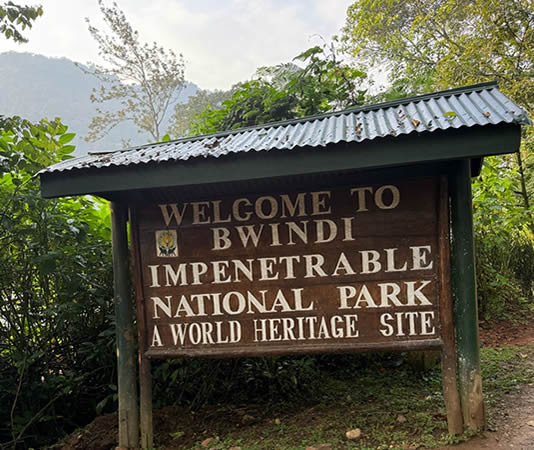
Bwindi Impenetrable National Park
A UNESCO World Heritage Site in southwestern Uganda, is best known as home to roughly half of the world's remaining mountain gorilla population. Its ancient, mist-cloaked forest is equally prized by birders, holding nearly 90% of all Albertine Rift endemic species alongside a wealth of other primates and forest wildlife.
Queen Elizabeth National Park
Uganda's most visited savannah park, stretches across the floor of the Albertine Rift Valley and is renowned for its tree-climbing lions in the Ishasha sector, the wildlife-rich Kazinga Channel, and a bird list exceeding 600 species - making it one of the most biodiverse protected areas on the continent.
Kibale Forest National Park
It protects one of East Africa's last expanses of pristine tropical rainforest and is celebrated as the primate capital of the world, home to thirteen primate species including large, habituated chimpanzee communities. Its forest trails also reward visitors with outstanding birding and access to the scenic Bigodi Wetland Sanctuary.
Mgahinga Gorilla National Park
Uganda's smallest national park, sits within the dramatic Virunga volcanic range bordering Rwanda and the Democratic Republic of Congo. Beyond its own population of mountain gorillas, Mgahinga offers golden monkey tracking, volcano hikes, and some of the finest high-altitude birding in the region.
Kidepo Valley National Park
Tucked into Uganda's remote northeastern corner and is frequently ranked among Africa's most spectacular wilderness areas. Its rugged savannah and semi-arid valleys harbour species found nowhere else in Uganda, including cheetah, ostrich and bat-eared fox, set against a backdrop of dramatic mountain scenery and traditional Karamojong culture.
Lake Mburo National Park
Uganda's smallest savannah park, offers a compact but rewarding introduction to East African wildlife, with zebra, eland, impala, and buffalo roaming acacia woodland and open grassland. Its accessibility from Kampala and options for walking safaris and horseback riding make it a popular stop on shorter itineraries.
Semuliki Forest National Park
Lying in the Albertine Rift Valley near the Congolese border, is an extension of the vast Ituri Forest and offers a distinctly Central African character unlike anywhere else in Uganda. The park is a haven for Guinea–Congo biome bird species, along with hot springs and forest wildlife rarely encountered elsewhere in East Africa.
Rwenzori Mountains National Park
Protects the legendary "Mountains of the Moon," Africa's highest mountain range after Kilimanjaro and Mount Kenya. Its glaciated peaks, afro-alpine vegetation, and unique high-altitude flora attract serious trekkers and mountaineers, while its lower slopes hold several Albertine Rift endemic birds.
With such a rich diversity of wildlife and landscapes, every one of Uganda’s national parks and reserves rewards exploration. Each destination offers its own distinct window into the country’s natural gifts — from sweeping savannahs and volcanic peaks to tropical rainforests, Rift Valley lakes, and winding rivers. Together, they illustrate why Uganda continues to be regarded as one of Africa’s most complete and rewarding safari destinations, offering in a single country what many travellers would otherwise need several trips across the continent to experience.
At Terrain Safaris, we specialise in designing personalised Uganda wildlife safaris and tour packages that bring these protected areas to life. Whether you are seeking high-adrenaline adventure, quiet relaxation amid pristine wilderness, or close-up encounters with Africa’s most iconic animals, our team is here to craft the perfect journey tailored to your interests, pace, and budget.
Beyond the ten national parks, Uganda’s twelve wildlife reserves provide equally vital sanctuary for the country’s biodiversity, often protecting ecosystems and migratory corridors that complement the flagship parks. These reserves tend to see fewer visitors, offering a more remote and exclusive safari experience for travellers seeking to venture off the beaten path.
- Pian Upe Wildlife Reserve — Uganda’s second-largest protected area, an expansive stretch of Karamoja savannah supporting cheetah, roan antelope, and a growing population of other plains game.
- Katonga Wildlife Reserve — a scenic wetland and savannah mosaic along the Katonga River, known for sitatunga antelope and diverse birdlife.
- Kigezi Wildlife Reserve — bordering Lake Mburo, offering extended habitat for savannah species within the biodiverse southwestern highlands.
- Kyambura Wildlife Reserve — home to the famed “Valley of the Apes,” a dramatic forested gorge supporting chimpanzees adjacent to Queen Elizabeth National Park.
- Ajai Wildlife Reserve — a West Nile reserve historically significant for its white rhino population, now central to ongoing conservation efforts.
- Bokora Corridor Wildlife Reserve — part of the greater Karamoja ecosystem, providing an essential wildlife corridor linking several protected areas in the northeast.
- Matheniko Wildlife Reserve — adjoining Pian Upe and Bokora, forming a vast contiguous landscape for Karamoja’s migratory wildlife.
- Bugungu Wildlife Reserve — bordering Murchison Falls National Park along the Albert Nile, extending habitat for elephant, buffalo, and a wealth of savannah birdlife.
- Karuma Wildlife Reserve — situated along the Nile near Karuma Falls, serving as an important buffer zone and wildlife corridor for the greater Murchison Falls ecosystem.
- Toro-Semliki Wildlife Reserve — located near the Rwenzori foothills, notable for its unique population of habituated savannah chimpanzees and oil exploration history.
- East Madi Wildlife Reserve — a West Nile reserve contributing to the conservation of the region’s savannah ecosystems.
- Aswa-Lolim Wildlife Reserve — a lesser-known reserve in northern Uganda, playing a quiet but important role in the country’s broader conservation landscape.

Bwindi Impenetrable National Park
Bwindi Impenetrable National Park stands as one of Uganda’s most iconic and sought-after destinations for Mountain Gorilla trekking. A UNESCO World Heritage Site, the park is home to over 50% of the world’s remaining population of endangered Mountain Gorillas,...
Murchison Falls National park - Uganda
This is Uganda’s largest National Park in Uganda: The present day Murchison falls national park was first protected in the 1920s, as Karuma, Bugungu and Kabalega game reserves. It was later gazetted as a national park in 1952 and named Murchison falls national park.
Kibale Forest National Park - Uganda
Kibale forest national park is located in the districts of Kabalore and Kamwenge approximately 330 kms west of Kampala. It extends southwards from fort portal & forms a block with Queen Elizabeth, Rwenzori, Semliki national parks as well as Toro Semiliki game reserve.

3-Day Bwindi Impenetrable Gorilla Trekking Tour
This itinerary takes travelers from the capital region of Entebbe/Kampala deep into the southwestern hills of Uganda, to one of the most biodiverse rainforests on the continent.
4 Day Rwanda Primates/Gorilla Trekking Tour
Over four days in Rwanda, embark on our journey to track endangered mountain gorillas in Volcanoes forest Park - one of the world's most inspiring wildlife encounters.
6 Day Gorillas & Dian Fossey Rwanda
Over six days in Rwanda, embark on our journey to track endangered mountain gorillas in Volcanoes forest Park - one of the world's most inspiring wildlife encounters.
Bwindi Impenetrable National Park in Uganda, famous for mountain gorilla trekking, is best visited during the two dry seasons: December to February and June to August. Trails are less muddy and slippery during these months, making the trek through dense forest and steep terrain more manageable. The wetter months (March–May and September–November) bring heavier rainfall, muddier paths, and more challenging hikes, though they offer lush scenery, fewer crowds, and sometimes discounted permits. Overall, June to August is often considered the prime window, combining favourable weather with Uganda’s peak tourist season.
Uganda’s Wildlife Reserves
Beyond the ten national parks, Uganda’s twelve wildlife reserves provide equally vital sanctuary for the country’s biodiversity, often protecting ecosystems and migratory corridors that complement the flagship parks. These reserves tend to see fewer visitors, offering a more remote and exclusive safari experience for travellers seeking to venture off the beaten path.
- Pian Upe Wildlife Reserve — Uganda’s second-largest protected area, an expansive stretch of Karamoja savannah supporting cheetah, roan antelope, and a growing population of other plains game.
- Katonga Wildlife Reserve — a scenic wetland and savannah mosaic along the Katonga River, known for sitatunga antelope and diverse birdlife.
- Kigezi Wildlife Reserve — bordering Lake Mburo, offering extended habitat for savannah species within the biodiverse southwestern highlands.
- Kyambura Wildlife Reserve — home to the famed “Valley of the Apes,” a dramatic forested gorge supporting chimpanzees adjacent to Queen Elizabeth National Park.
- Ajai Wildlife Reserve — a West Nile reserve historically significant for its white rhino population, now central to ongoing conservation efforts.
- Bokora Corridor Wildlife Reserve — part of the greater Karamoja ecosystem, providing an essential wildlife corridor linking several protected areas in the northeast.
- Matheniko Wildlife Reserve — adjoining Pian Upe and Bokora, forming a vast contiguous landscape for Karamoja’s migratory wildlife.
- Bugungu Wildlife Reserve — bordering Murchison Falls National Park along the Albert Nile, extending habitat for elephant, buffalo, and a wealth of savannah birdlife.
- Karuma Wildlife Reserve — situated along the Nile near Karuma Falls, serving as an important buffer zone and wildlife corridor for the greater Murchison Falls ecosystem.
- Toro-Semliki Wildlife Reserve — located near the Rwenzori foothills, notable for its unique population of habituated savannah chimpanzees and oil exploration history.
- East Madi Wildlife Reserve — a West Nile reserve contributing to the conservation of the region’s savannah ecosystems.
- Aswa-Lolim Wildlife Reserve — a lesser-known reserve in northern Uganda, playing a quiet but important role in the country’s broader conservation landscape.
Get in touch with us for expertly curated experiences across:
- Uganda National Parks
- Uganda Wildlife Reserves
- Protected Areas in Uganda
- Uganda Tourism Products
Below is a list of Uganda’s most popular national parks and game reserves, each offering exceptional safari experiences and timeless natural beauty. Let us help you explore the Pearl of Africa – one unforgettable destination at a time.
Book your East African Wildlife Safari today.
Explore some of our most popular tours: Uganda Gorilla Trekking Tours, Uganda Wildlife Safaris, and Uganda Cultural Tours.